Check out the Health Talk Podcast
with special guests: Aimee Shannon
& Vicky Knisley-Henry
Health Partners Free Clinic - Troy, OH

Troy, OH - Health Partners Free Clinic opened in Troy, Ohio in the late '90s. In the wake of Covid-19, Health Partners became more than just healthcare, they became the hope of more than 1,200 families.
Aimee Shannon, 51, the social worker for Health Partners Free Clinic, and
Chairperson for the Miami County Food Insecurity Alliance offers insight into why
the gap for quality healthcare coverage exists.
“Once the Affordable Healthcare Act passed, people think that everybody has the
opportunity to get insurance, but it’s a struggle for a lot of folks. We see a lot of
people who make too much money to qualify for Medicaid, but they don’t make
enough money to really be able to afford a decent insurance,” said Shannon. “They might be able to afford one, but it might have a $5,000 deductible or super high prescription costs.”
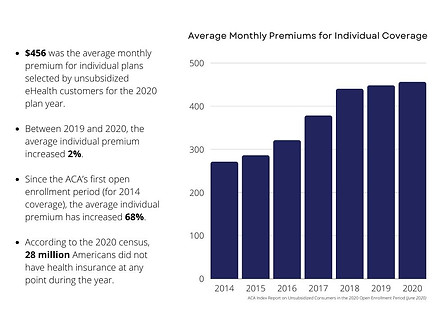
Individual healthcare coverage on average through the Affordable Care Act (ACA) is $456, with an average yearly deductible of $4,364. This marks a 68% increase from its inception in 2014. A family of four will spend an annual average of $25,011 with combined premiums and deductibles, a 73% increase from 2014. This does not include the cost of prescriptions with an annual average of $1,200.
“It’s kind of unreal how many men we have come through who are dealing with different issues, and they’re working and they’re trying to make things go,” said Shannon. “Most of them work in a factory and there’s no way they can afford insurance.”
Manufacturing jobs in Miami County make up 26.4% of. the workforce, with an average salary of $33,283. Shannon says males aged 30-40 who work manufacturing jobs make up the largest demographic of patients seen at the clinic with the majority being diagnosed with diabetes or heart disease.
Miami County Public Health (MCPH) in partnership with. the Applied Policy Research Institute at Wright State University released the Miami County Public Health Assessment in 2017 which determined that the prevalence of diabetes is higher in Miami County than in Ohio or the U.S., and the prevalence of coronary heart disease in Miami County is almost twice that of Ohio or the U.S.
A Community Health Assessment (CHA) is conducted every three years and lays the foundation for the Community Health Improvement Plan (CHIP). The CHIP takes the data and creates a plan to address areas where community health improvements are needed. Chronic disease is listed as the top priority from data provided by the CHA.
Dr. Vicky Knisley-Henry, Health Educator for MCPH, works to raise awareness on the importance of diet and exercise to prevent chronic illnesses such as diabetes, cardiovascular disease, and hypertension.
“A couple years ago I created ‘It’s an Almost 5k’ for Halloween. It’s a Halloween costume fun run,” said Knisley-Henry. “It’s a free active event to give people the opportunity to get out and be active with their families and with their kids.”
This all-ages approach to health equity is an objective for Nate Bednar, Director of Community Services at MCPH. Although Covid has brought its challenges, Bednar has found new ways to communicate with the community.
“If I could put a positive spin on what COVID did for us, it was our ability to use social media and our ability to change our website. Covid pushed us to do that because we knew we had to have a better way to communicate with people,” said Bednar.
Facebook, Twitter and Instagram have given MCPH the opportunity to reach a younger demographic in an area that was previously unexplored. Knisley-Henry agrees,
“If you can start educating children when they’re young, it’s a heck of a lot easier to start healthy habits early than it is to correct a chronic disease 30, 40 years down the road.”
Education on controlling diabetes through proper nutrition prompted Shannon to reach out to Alisha Barton, Extension Educator with The Ohio State University Extension Office of Miami County, to host a free 4-week ‘Dining with Diabetes’ cooking class. It is a free, online class and comes with a cookbook with diabetic-friendly recipes.
In July 2019, the clinic joined forces with The OSU Extension Office and
New Path to form The Miami County Food Insecurity Alliance after
recognizing the needs of their patients to have more convenient access to
nutritious food. Shannon says patients who are there to receive treatment
now also have access to their onsite food pantry, which is stocked by
Shared Harvest Food Bank, an affiliate of Feeding America, serving Miami
County. The clinic’s food pantry is open to all patients, with an emphasis on
ensuring that diabetic patients are going home with diabetic-friendly foods.
In February of 2020, the clinic set up a drive-through to provide fresh meats
and produce to anyone in Miami County facing food insecurity due to
Covid-19. Shannon explains how the food pantry expanded to the
community:
“There were tariff issues and so there was excess food going to Feeding
America, that food went to Shared Harvest Food Bank, they had to get it
into the community. So a way to do that was literally just to set up in a
parking lot and just say, ‘Come get free food,’” said Shannon.
By April, 2020, they had quadrupled their food distribution when 1,200 families drove through in just three hours.
The median household income reported in Miami County in 2021 was $61,041, with 8% of residents with income below the poverty line. However, job loss and empty shelves in 2020 lent to the 4-fold increase in families facing food insecurity in Miami County.
Shannon noted about 25% of the people they served through their food distribution line were over the age of 64.
“That’s been ongoing,” said Shannon, “But with food prices raising through Covid, it’s been significantly worse.”
The clinic received funding through The Duke Foundation and Troy Land Development to open their new location in 2007 that increased services to include a public garden.
The garden is a coordinated effort with the Ohio State Extension Office and will include a garden manager to oversee volunteers tending to the garden for roughly 15 hours per week.
Bart Denlinger of Denlinger Construction and Mike Sullivan of Meijer
Distribution donated the material for 20 raised garden beds. Students from
Upper Valley Career Center have assembled 15 of the beds on the South
side of the clinic and will be ready to plant this spring. The garden is
expected to produce fresh vegetables including tomatoes, beets, greens,
hot peppers, onions and corn for more than 200 families and will be open
to the public.
While MCPH continues to educate the public on early prevention, Health
Partners Free Clinic is providing much-needed services in a county
struggling to overcome increased hardship contributing to chronic illnesses.
Health Partners Free Clinic offers a variety of services including blood work and diagnostic testing, an in-house pharmacy, healthcare enrollment assistance, with in-person and telemedicine visits available.
“No one ever pays a dime for our services. We don’t accept any payment.
We don’t have any ability to bill. We do have patients that will make donations, which is amazing when that happens, but they’re not expected to,” said Shannon. “There’s no expectation at all.”
You can reach Free Partners Health Clinic at 937-332-0894 or online at www.HealthPartnersClinic.org. Walk-in hours are Monday 8:30 a.m. to 11a.m., and Thursday 1 - 6 p.m. at 1300 N. County Rd. 25A Troy, Oh, 45373.